
A Metaphorical Postcard #8
Things worth the effort

“Not until we are lost do we begin to understand ourselves”.
Henry David Thoreau 1817-1862
West Berkshire, June 2026
This has turned out to be a weekend of me sharing recipes with you.
In addition to yesterday’s piece, which has six of my current favourite Ice creams, sorbets, and Fro-Yos, in this article, I share two more things that have kept me busy this last week. Eight recipes for you in two days…I’d say that this is previously unheard of in this collection of words.
Here today is a rough, Rugbrød, a rye and seed loaf, enriched with dark beer and miso, most certainly a fine addition to your breadmaking rotation. A traditional Scandinavian loaf that I can’t claim any originality for, but know that my recipe works if you follow the rules.
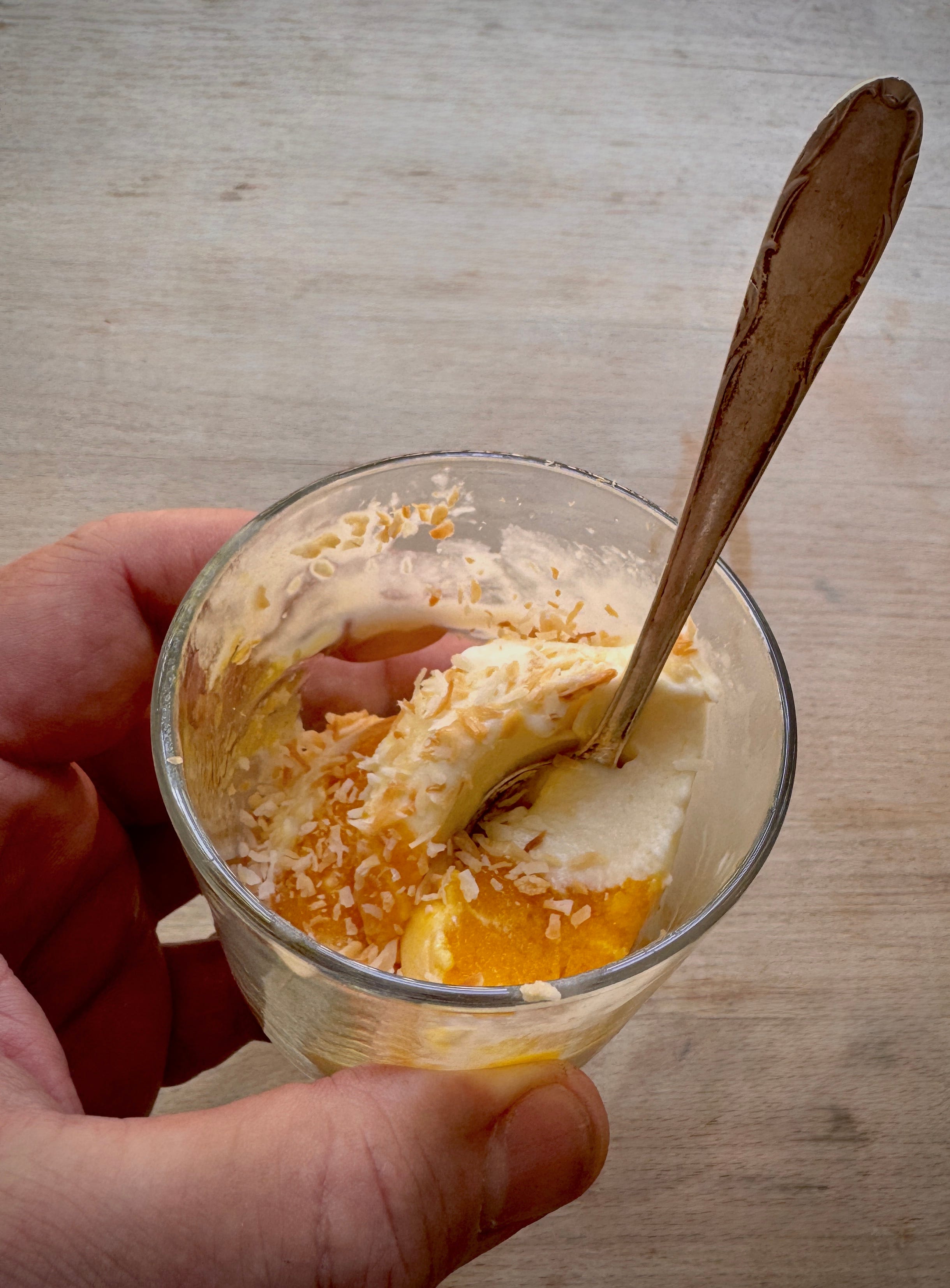
Alongside the loaf is another ice cream that has dutifully haunted my dreams, bothering my sleep in these stifling last few days, as here in rainy England it has been nearly forty degrees Celsius this week. It’s a Coconut Cream and Mango Ripple. I adore coconut in any form, and mango sorbet is also one of the finest things on earth, so twixt the pair of spectral ices that tormented my dreams, I got to work and thought I’d conjure a glorious ripple, served in a frozen tumbler and sprinkled with toasted coconut to sate my cravings, as it were. Also, knowing that I can’t buy it in the shops, and then the realisation that even if I could, I doubt it would be as nice as mine, and more to the point, I do love a ripple.
And today, as yesterday, at the end of the piece, there’s a great big discount for you.
75% OFF all new sign-ups, if you click the link here or at the foot of the page
As a way of saying thank you to you all for being here, as I cross into the threshold of five thousand subscribers.
Anyway.
First things first.
Edge
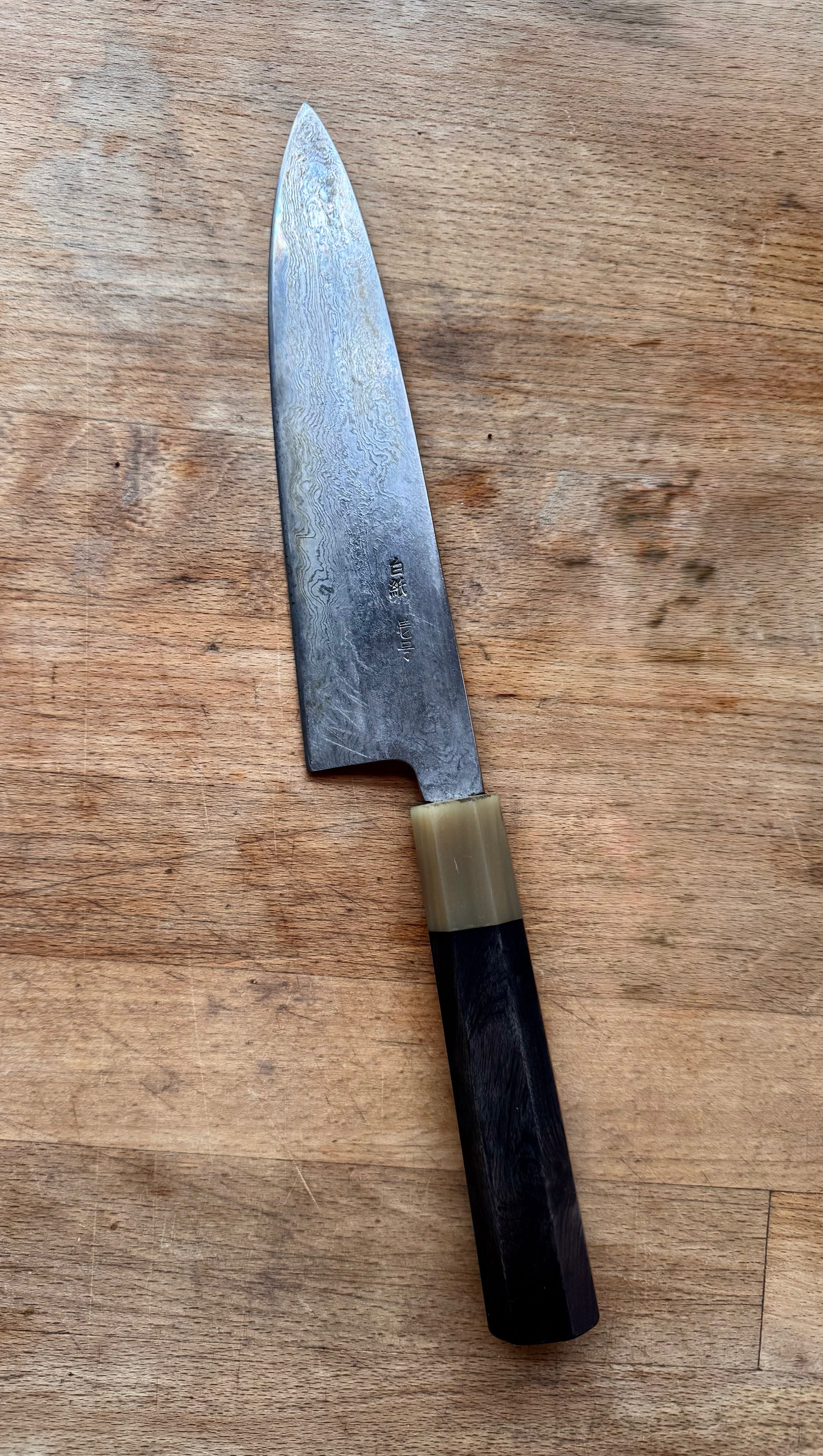
I sharpened it just for the occasion.
White carbon steel, hardened and folded and hammered, dozens of times by those who repeat the traditions of what has been practised for hundreds of years, a knife with an ever so delicate edge that certainly bears the scuffs of where I’ve had to repair it after a careless dink against something unwise for such a delicate blade. I polished it over each stone in succession, rectangular pieces of mineral, mined from deep inside the geological layers of the Hon-kuchi Naori stratum. Forward and backwards over the space of half an hour, meticulously holding the blade at not much more than fifteen degrees against the whetstone, time after time, stroke after stroke. If I lose concentration, the knife will most certainly catch the corner of the block, making it jump up awkwardly at me, hopefully missing the fingers on my other hand that keep the tip of the blade in position as it glides to and fro. A layer of burr forms on the blade under the layer of wet grit, which allows the knife to move without friction, a dark, sooty paste that works its way into the cracks in the skin of my fingers and under my nails, which I’ll surely never get out despite scrubbing with soap and a small bristle brush that I believe was designed to clean dirt from mushrooms.
My scarred hands and fingers that over the years have been burned and cut into with knives and hot iron, fat burns on top of the newly healed burns, enraged welts on my forearms that back in the day made me look like a junkie as I sat on the tube. Strangers avoided me for sure, with my infected and sore arms, fiery and red. I once cut open the knuckle of my middle finger on my right hand, and damaged the tendon, so that now the middle finger droops slightly downwards after slipping on a wet floor, and in some futile attempt at self-preservation, I reached out to break my fall, but my hand instead met the sharp corner of a metal shelf, breaking open my skin and exposing the pearly white bone. I never went to the hospital as I couldn’t be bothered, or at least that's what was seemingly expected of us. Wearing our wounds with pride, or at least the fear of dismissal for letting the team down. Such were those days. I once plunged an oyster knife deep into the base of my little finger so deep that it jarred into the bone, and when I had summoned the courage to look, I was transfixed by the yellow subcutaneous fat that seeped out of the hole in my skin.
Greedily letting myself get lost in the past here was not my intention at all, but I find that letting my mind wander off often brings back the details I need in order to write.
Summoning the circumstances of the minutiae of a life spent at work, so every memory summoned must be written down, as I have learned it plays its own part in a bigger picture that one day might help me to know who I thought I once was, or who I am now, because isn’t that the purpose of memoir?
To revisit what was, to try to cobble it all together so that at the very least it might make sense at some point.
Those early years as a child, when I learned I could tell a good story to anyone who might listen. A young man with sharp edges that didn’t quite fit in the comfortable holes I was expected to fill. Driven by the need to be the one to make people happy, whatever the cost to myself, as I would later discover. And then that day, high up on that path in the buffeting wind, where I remember you took that photograph. The one that I’ve always kept to remind me of a time far away now, a picture which I look at from time to time to focus, where you can see in my dark, sad eyes how unhappy I’d become in that Damascene moment, at which point it was to be the end of that chapter, finally finding the strength to say no, before I couldn’t give any more.
I digress.
After polishing the knife on the stone, I take out a long strop of tan coloured leather, rough with cuts and the dried mineral slurry and burr from countless hours of sharpening tools.
I place the blade flat against the surface, and with even pressure, I pull once toward me, then rotate the blade once so its other face lies against the old leather and then pull again to complete the task, to strip off the burr. I could rip out a sheet of newspaper( The Times was always a superior quality sheet of carbon, though The Evening Standard would do at a push, though not the pages with photographs as they contain too much ink) I’d give a few gentle pulls with the flat of the blade against it, feeling the carbon bite against the steel of the knife to finish the honing, but I don’t have a newspaper to hand, and a page ripped from my diary is a habit that I don’t wish to start.
Sea Trout
I take a moment to consider this large wild Sea Trout that I hang up to inspect, my thumb looped through the tag that twists through its mouth and gills. Stamped with a number from the Environment Agency to prove that it hasn’t been poached (pardon the pun), returned from its journey back to the river of its birth from the sea to be caught, killed and tagged. I carefully place it in front of me on the table and study its markings. Silver and gold, speckled and mottled, iridescent like the old Tudor glass you can pull from the mud of the Thames if you have a keen eye, centuries-old glass that shimmers through the spectrum despite the passing of centuries. The trout’s eye, clear as glass, gills the deep, rich colour of blood.


With the back of a small knife with a blade as long as my index finger, I run it backwards from the tail to the head to begin removing the tiny soft scales that stick to everything, and will likely appear for the rest of the day, no matter how hard I try to keep them under control.
I pull the blade backwards over the surface of the skin, running the metal against the scales, backwards, letting them fall into shimmering clusters of what looks like silvery coins, exposing the soft dappled skin beneath. I carefully remove the fins, using a stout pair of scissors to snip them away. A habit that remains with me to perform with all fish, as a dorsal spike under a fingernail is not something to wish upon anyone, and though the fins of the trout are certainly more forgiving than Dory or Bass, a methodical approach suits the occasion. I pick up the knife and run my thumb across the edge of the blade, knowing I likely could shave that small patch of hair on my wrist if I chose to. An old habit from years ago, whereby I would confirm the sharpness of my knives after honing by removing a small patch of hair near my wrist.
Just because.
I trace the contour from the back of its head from next to the spine around the gills to under its chin first with the tip of my finger, in a concious effort to understand its structure, and then with the newly sharpened blade, letting the edge of the knife work effortlessly through the skin, meat and bones in a simple sweep, I run the knife against the back of the dorsal, from head to tail at a very slight angle lifting the muscle away from the bone in long single movement. I turn the fish over and repeat the process from the other side so that I have a pair of neat fillets, deeply muscular, the membrane intact over the inside of the belly, long pearly white rib bones that I pull away with the tip of a set of small stainless steel tweezers that I always seem to misplace, but that always seem to find their way back to me.
Using the back of the blade, held perpendicular to the skin on the fillet, I drag the knife from the tail to its collar, removing a fine layer of fat from the skin. This ensures that when cooked, it will be dry and crisp, removing the excess fat and moisture that might cause it to stick to the bars of the grill as it sits over broken-down embers of oak logs that burn in the hearth. The coals stutter and spit as the fat drips from the skin onto the coals below, as I press downwards using the back of my knuckles against the surface of the fish, flattening the skin as it blisters and chars in the fire. Fresh oregano, soft needles of rosemary and stalks of fennel with their pollen-filled flower heads picked from the bushes, tied into a bunch, bound tightly at one end with a thick knot of twine, dipped like a brush into olive oil and then onto the fish as it cooks. With a short length of slightly bent old copper pipe that I use to blow into the embers to stir up the fire, I prod and poke, lifting a bank of embers to one side of the hearth, and with a sharp crackle and rush of hot orange sparks, cinders spitting upwards as the oxygen feeds the fire as I move the hot, glowing ashes around. I leave one side of the hearth with a mound of slow-burning incandescence as I smash down the smouldering logs into cinders and ash.
Lefteris would have surely approved.
I pull off a small branch from a lemon tree that grows next to the fire, along with a handful of blossoms. The tiny white flowers with their ethereal smell, one that I know is surely what heaven smells like, as I crush the small set of leaves in my fist, releasing the citrus perfume and placing the deep green offshoot onto the coals to smoulder, watching the heat blacken and twist the leaves in a spiralling flourish of smoke for the last half a minute, to heighten the flavour of the fish as it rests on the side of the hearth
With the tip of a knife, I lift up the trout one centimetre at a time, looking to see the golden charred edges where the skin met the heat, lifting carefully, gently prizing the crisp-skinned fillet away in one motion.
Scottadito.
Burned finger tips scorching my hands as I lift the fish away. from the grill. I take a pinch of salt crystals and a small clutch of lemon blossoms, letting it fall onto the skin, oily and brittle, scorched golden and black as the coals went to work, offset with the small ivory flowers that pervade the warm afternoon with their Elysian scent.
And now that midsummer has passed, wild flower crowns that we wore on our heads as we danced now faded and withered, as the longest day passed, and now the bees will have learned that their daylight is just that tiny bit shorter, their innate understanding of the rhythmn of the year, now tuned to accept that there is much to be done in preparartion for the months that will follow.
In the coming days, I will open the hives once again, allowing me to admire their work; their diligence to their tasks that never fails to inspire something within me. These little bees that I believe have taught me much about life, but that’s for another day and another story.
That I can learn so much from the small insects that I care for inspires me to be better.
And that is all I can hope for.
Two recipes
Firstly, Rugbrød
This is a dense, savoury, intense loaf, reminiscent of all of those trips to old-fashioned bakeries in Europe where dark, dense loaves sit on the old wooden shelves.
Slice it and spread it with cold butter and a little crushed salt.
It is truly delicious.


Rye starter:
100g rye flour
100g water
25g sourdough starter
(To maintain this starter, I feed mine at a 1:2:2 ratio)
For the dough:
160g rye flour (plus a little extra if the mixture is too tacky)
260g dark beer
160g active rye starter (as above)
16g malt syrup or dark treacle
140g mixed seeds
50g golden flax
50g ground flax
20g poppyseeds
15g dark muscovado
25g dark miso
40g cooked mixed grains - Barley and Quinoa work well for me
8g sea salt
Extra seeds for coating the loaf, scattered in a tray
The starter comes first, as it always does.
Mix 100 grams of rye flour with 100 grams of water and 25 grams of whatever sourdough starter you have going, stir it together in a jar or bowl, cover it, and leave it alone for 12 hours. Overnight is fine. It will do what it needs to do without you.
The next day, butter or oil a loaf tin and set it aside. On a small tray, scatter your seeds: sunflower, flax, sesame, poppy, and pumpkin, enough to coat the loaf generously when the time comes.
Combine everything in a large bowl and mix with wet hands until you have a thick, shaggy dough with no dry flour left hiding at the bottom. Wet your hands again and coax it into an oblong, roughly the shape of the tin, slightly narrower. Roll it through the seeds, pressing gently so they adhere on all sides, then lower it into the tin. If for whatever reason, the mixture is too slack, add more rye flour in small increments, though be careful not to add too much. You will know when the mixture is just tacky enough to coax into your shape. I use a couple of bench scrapers to make neat edges on the loaf and to lift it in and out of the seeds.
Now leave it somewhere warm for two to three hours. If your kitchen is cold, set the tin in a shallow tray of warm water and aim for around 28°cinside the dough. You’ll know it’s ready when it has risen slightly, and the surface looks faintly cracked, not dramatically, just a little restless. It will not double in size. This is a heavy, dense loaf, so dont be fooled by its reluctance to do a great deal.
Heat the oven to 200°c.
If you want a good crust, put a shallow roasting tin on the bottom of the oven while it heats. When the bread goes in, pour water into that tin and close the door quickly. The steam does something useful to the crust in those first minutes.
Bake for 30 minutes, rotate the tin, then bake for another 20 to 30 minutes. The loaf is done when a thermometer reads 95°c at the centre, or when it sounds hollow when tapped underneath. Turn it out onto a rack and leave it, properly leave it, ideally overnight before cutting. The inside is still cooking as it cools, and it will be gummy if you slice it too soon.
Rye loaves like this need a long time to settle inside, so do be patient.
It is very much worth the wait.
Coconut cream and Mango Ripple Gelato
An alluringly rich ice cream and a fruity sorbet mixed into a mass of ivory and gold, best with a sprinkle of toasted coconut and eaten in vast quantities.
Coconut Gelato
400g full-fat coconut milk,
240g heavy cream,
160g sweetened condensed milk,
40g toasted shredded coconut,
a pinch of fine salt.
Whisk the coconut milk, condensed milk and salt together, then add the cream and briefly whisk the mixture until it is smooth; you’re not whipping anything, just making it a smooth, silky mass. Refrigerate it until properly cold, as this will prevent the formation of ice crystals as it sets later in the machine. In ice cream making, it is important to chill the mixture properly before churning. After resting it for a few hours in the fridge, or stirring until cold over a bowl of ice, churn in your machine until dense and scoopable.
This is the first part of your ripple, so transfer it to a container and put it in the freezer while you deal with the mango sorbet.
Mango Sorbet
500g mango purée (Boiron is very good)
225g water
90g caster sugar
25g glucose syrup
Optional squeeze of lime juice
Warm the water, sugar and glucose together in a pan, gently, just enough to dissolve everything into a clear syrup. Pour it whilst warm into the mango purée and whisk until smooth. Add the juice of a lime if you like it.
Taste it.
It will seem too sweet, which is correct; the cold takes the edge off later, as is always the thing with sorbet. Refrigerate the mixture thoroughly, as you know is the correct thing to do despite being impatient, then churn in the machine as before until it holds its shape cleanly with a dipped spoon.
The Ripple
Take the coconut ice cream out of the freezer and, while still soft, spoon it into a container in alternating layers with the freshly churned mango sorbet and then draw the back of a spoon through once or twice in long, slow strokes. Cover and freeze for at least an hour or so before you eat it, as it will still be quite soft from being interrupted during its sit in the cold.
When it is deliciously firm, scoop it up and get the spoons.
For a little extra frisson, sprinkle your scoops (note the plural here) with toasted coconut and eat greedily until your brain freezes.
Here is a great big special offer for you, which is available to click on until the end of August.
It is a thank you to all of you who come here.
The week ahead
Pressing on with the writing of my book, my brain has hit a wall recently.
I have so much going on, if I'm being honest with myself. To write one book, I must write two in tandem, to then condense the story at the end, to create one final piece of work. I have set myself plenty of time to achieve this, but I am fully aware that it involves many hours of my deep concentration and a meeting with my agent beckons.
I juggle all of this alongside my work, beekeeping, heatwaves, dachshunds and dreaming about ice cream, along with family life and discussions on an ongoing project of mine that now involves established PhDs in different time zones (just to freak me out a little further), whilst trying to keep a little headspace clear for myself. This little collection of words here grows and changes as all good things do, and I'm grateful for everyone who finds their way here to read what I write.
I shall be continuing my journey into pots of rippled ice cream this week (my ongoing fixation), as I plan to make a creamy fig leaf ripple, swirled with wild honey and ripe fig jam. I shall let you know the result. I can taste it already in my head, and I can assure you it’s very good. I also have a plan for a blackcurrant leaf ice cream with an apple sorbet swirl that has just popped into my head, annoying me even further.
I shall open three beehives tomorrow most likely, as the weather has finally cooled off a little and I’ve less chance of the wax cappings melting in the sun and killing the brood. I plan to donate one frame of brood and a handful of nurse bees to the swarm hive in the nucleus to strengthen their numbers, as they dwindled with the loss of their original queen, who I believe got lost on her way back home from her mating flights. Their new queen is happily laying, but as workers only live for around six weeks, I think the small box of bees I collected from the tree that afternoon might benefit from some numbers to help rear the newly laid larvae. This said, it all depends on all being well in the other two hives.
Onwards, and until next week,
William
If you enjoy my writing, do feel free to pass it around. I’d be ever so grateful.
Will, you write like the way you prepare your phenomenal feasts: Methodical, deliberate, concise, vulnerable, gentle, and with all of your heart.
The scars of youth in the kitchen trenches may not have healed then, but grateful to witness that they heal in different ways for you now.
Thank you for sharing these incredible recipes (the ice creams post before this one, too)!
I’ve always enjoyed your writing Will, everyone knows this. Reading this piece this morning I noticed your precision with words and thoughts in a flow that comes with a degree of mastery. I can see you are writing your story, behind these words.